Leg pain can be frustrating because it does not always point to one clear cause. Some patients feel aching after walking. Others notice swelling, heaviness, visible veins, cold feet, numbness, or pain that seems worse after standing. In Queens and Forest Hills, many people search for answers because they want to know whether the problem is orthopedic, vascular, or both.
A vascular ultrasound is one of the most useful first tests when circulation may be involved. It is noninvasive, does not use radiation, and can show how blood is moving through veins and arteries in the legs. At M&S Vascular and Orthopedic Group in Forest Hills, Dr. Amir Salem uses vascular evaluation to help patients understand whether leg symptoms may be related to vein disease, artery disease, blood clots, or another circulation concern.
Why Leg Pain Needs the Right Diagnosis
Leg pain is common, but the source can vary widely. Muscle strain, arthritis, nerve irritation, tendon problems, and back conditions can all cause pain that travels into the hip, knee, calf, ankle, or foot. Circulation problems can overlap with those symptoms, especially when pain changes with walking, standing, elevation, or rest.
That overlap is why guessing can delay useful care. A patient with knee arthritis may also have peripheral artery disease. Someone with varicose veins may also have back-related nerve pain. A person with calf swelling may need a clot ruled out before starting routine exercise or massage.
A careful exam helps narrow the possibilities. Vascular ultrasound adds another layer by showing blood flow in real time. This can help the care team decide whether symptoms fit a vein problem, an artery problem, or a condition that should be evaluated from another angle.
What a Vascular Ultrasound Can Show
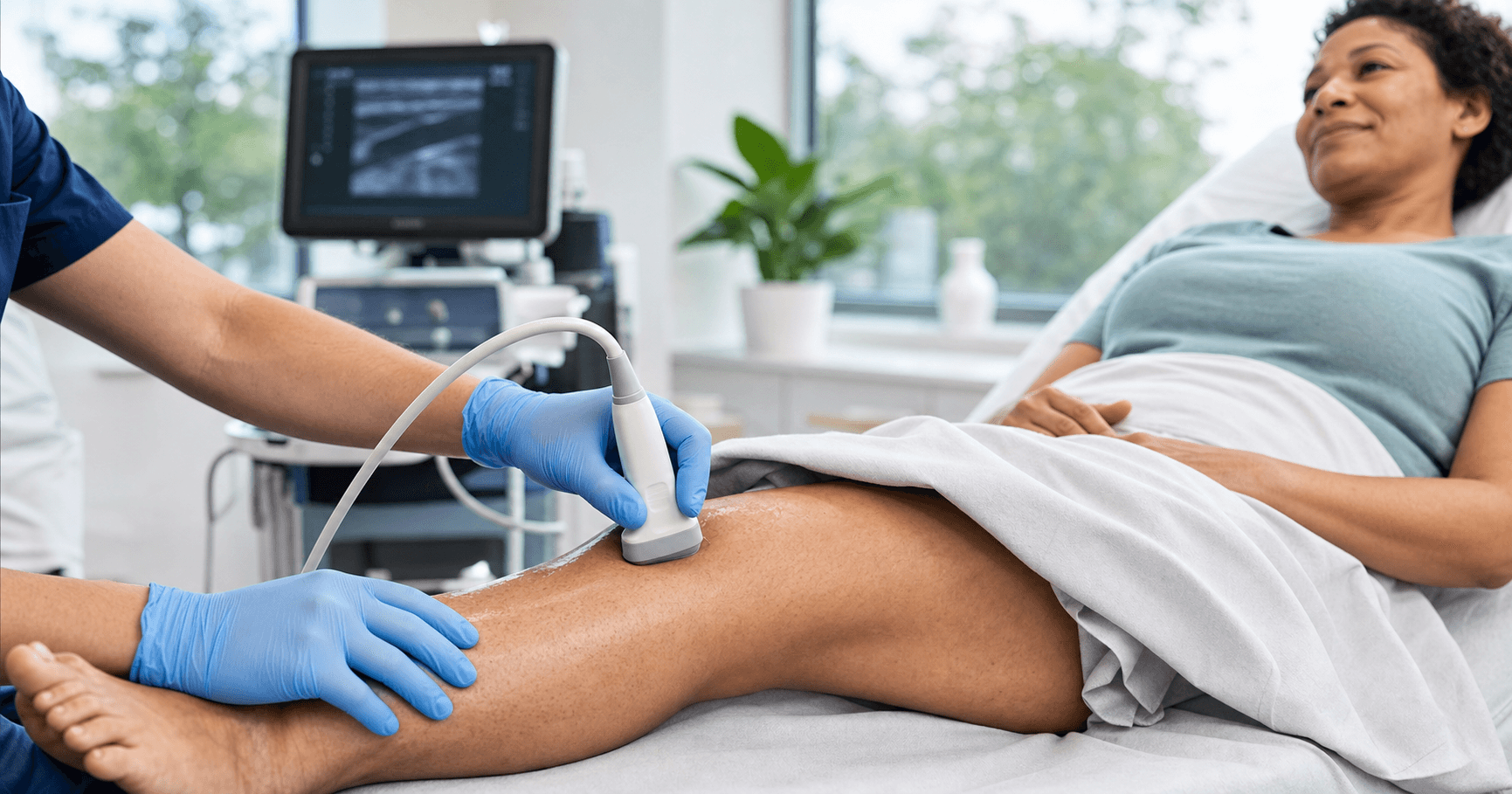
A vascular ultrasound uses sound waves to create images of blood vessels. The test can evaluate veins, arteries, or both depending on symptoms. For many patients, the ultrasound probe is moved gently along the leg while the technologist or physician looks at the vessel structure and blood flow pattern.
A venous ultrasound can look for deep vein thrombosis, also called DVT, which is a blood clot in a deep vein. It can also assess venous reflux, where valves in the veins do not close properly and blood pools in the legs. Reflux can contribute to varicose veins, swelling, heaviness, skin discoloration, and aching after long periods of standing.
An arterial ultrasound can evaluate how well blood is traveling from the larger arteries into the lower leg and foot. This may be useful when symptoms suggest peripheral artery disease, especially leg pain with walking that improves after rest, coldness in the foot, slow-healing wounds, or weak pulses.
Symptoms That May Point to a Circulation Issue
Not every sore leg needs vascular testing, but certain patterns deserve attention. Calf pain that appears after walking a predictable distance and improves with rest can be a sign of reduced arterial blood flow. This is sometimes called claudication, and it can be associated with peripheral artery disease.
Swelling that worsens during the day, aching after standing, visible varicose veins, skin irritation near the ankles, or heaviness that improves with leg elevation may point toward venous insufficiency. These symptoms can affect work, commuting, exercise, and sleep, even when they begin gradually.
A sudden swollen, painful, red, or warm calf should be evaluated promptly because a blood clot may need to be ruled out. Patients should also seek urgent medical attention for chest pain, shortness of breath, sudden weakness, sudden severe leg pain, or a cold pale foot.
What Happens During the Test
Most vascular ultrasound exams are straightforward. You may be asked to lie on an exam table while the leg is positioned so the vessels can be viewed clearly. A gel is placed on the skin, and the ultrasound probe is moved over the area being studied.
For a venous exam, the technologist may apply gentle pressure with the probe to see whether veins compress normally. You may be asked to change position, hold your breath briefly, or perform simple movements so blood flow can be assessed. For an arterial exam, the focus is often on flow signals and narrowing patterns in the vessels.
The test usually does not require needles or sedation. Some areas may feel tender if the leg is already painful, but the exam is generally well tolerated. Results are interpreted in the context of your symptoms, medical history, and physical exam.
Conditions Vascular Ultrasound May Help Evaluate
For Queens and Forest Hills patients with leg symptoms, ultrasound may help evaluate several common vascular concerns. These include deep vein thrombosis, chronic venous insufficiency, varicose veins, superficial vein inflammation, peripheral artery disease, and circulation changes related to diabetes or smoking history.
The test can also support planning when a minimally invasive vein treatment is being considered. Mapping the veins can help identify which vessels are not functioning properly and whether treatment should target superficial reflux, deeper vein concerns, or another issue.
For artery concerns, ultrasound may help determine whether additional testing is needed. Some patients may also need ankle-brachial index testing, CT angiography, lab work, wound evaluation, or coordination with other specialists depending on the findings.
How M&S Connects Vascular and Orthopedic Care
M&S Vascular and Orthopedic Group is built around a practical reality: leg pain is not always one specialty's problem. Dr. Amir Salem focuses on vascular and interventional radiology evaluation, while Dr. Mehran Manouel and the orthopedic team evaluate joint, tendon, sports injury, and musculoskeletal causes of pain.
This matters for patients who are unsure whether their symptoms are coming from circulation, the spine, the knee, the hip, or the foot and ankle. A combined perspective can reduce the chance that one contributing factor is missed. It also helps patients get clearer next steps instead of bouncing between disconnected appointments.
The Forest Hills location is convenient for patients from Rego Park, Kew Gardens, Jamaica, Flushing, and surrounding Queens neighborhoods. When symptoms involve both movement and circulation, local access can make follow-up and testing easier to complete.
When to Schedule an Evaluation
Consider scheduling a vascular evaluation if leg pain keeps returning, walking distance is getting shorter, swelling is persistent, veins are painful or bulging, skin near the ankle is changing color, or a foot wound is slow to heal. Patients with diabetes, smoking history, high blood pressure, high cholesterol, prior blood clots, or family history of vascular disease should take recurring symptoms seriously.
You do not need to know in advance whether the problem is venous, arterial, orthopedic, or nerve-related. The point of an evaluation is to sort that out with the right exam and testing.
Frequently Asked Questions
Is vascular ultrasound painful?
Most patients tolerate the test well. The probe may press on tender areas, especially if there is swelling or inflammation, but the exam is noninvasive and does not use needles.
Can ultrasound diagnose every cause of leg pain?
No. Ultrasound is useful for evaluating blood flow and vessel structure, but leg pain can also come from joints, muscles, nerves, tendons, or the spine. Your doctor may recommend additional testing if symptoms suggest another source.
When is leg swelling urgent?
Sudden one-sided calf swelling, redness, warmth, or pain should be evaluated promptly because a blood clot may need to be ruled out. Chest pain, shortness of breath, sudden weakness, or a cold pale foot should be treated as urgent.
Do varicose veins always need treatment?
Not always. Some varicose veins are mainly cosmetic, while others cause aching, swelling, heaviness, skin changes, or ulcers. Ultrasound can help determine whether vein reflux is present and whether treatment options should be discussed.
Can vascular and orthopedic problems happen together?
Yes. A patient can have knee arthritis and poor circulation, or back-related nerve symptoms and vein disease. That is why a coordinated vascular and orthopedic evaluation can be helpful when symptoms are mixed.
Schedule a Leg Pain and Circulation Evaluation
If you are dealing with leg pain, swelling, visible veins, walking-related calf pain, or circulation concerns in Queens or Forest Hills, M&S Vascular and Orthopedic Group can help you understand what is happening. Call (718) 897-2228 or visit https://www.msorthovasc.com to request an appointment.