
Genicular Artery Embolization (GAE) for Knee Pain in Queens & Long Island
Non-surgical treatment for chronic knee osteoarthritis pain. Outpatient procedure. Avoid or delay knee replacement.
Why Embolization?
Written by Practice Editorial Team · Medically reviewed by Amir Salem, MD, Vascular & Interventional Radiologist · Last updated April 26, 2026
What is Genicular Artery Embolization?
Genicular Artery Embolization (GAE) is a minimally invasive procedure that reduces chronic knee pain by decreasing inflammation around the joint. An interventional radiologist uses a thin catheter to deliver tiny embolic particles into abnormal blood vessels feeding the inflamed knee tissue, calming the inflammation that drives pain. No bone or joint surgery, no general anesthesia, same-day discharge.
GAE may be a good fit for adults who:
- Have chronic knee pain from moderate to severe osteoarthritis
- Have not responded adequately to physical therapy, NSAIDs, injections (steroid, hyaluronic acid, PRP)
- Want to avoid or delay total knee replacement
- Are not surgical candidates due to age, weight, or other medical conditions
What Is Genicular Artery Embolization?
Chronic knee osteoarthritis causes more than just cartilage wear — it triggers ongoing synovial inflammation driven in part by abnormal new blood vessel growth (neovascularization) in the joint lining. These new vessels accompany the nerve fibers that transmit pain, and they are particularly responsive to targeted embolization.
GAE works by selectively closing these abnormal vessels. Using real-time X-ray fluoroscopy, an interventional radiologist navigates a microcatheter from a small puncture in the wrist or groin into the genicular arteries supplying the inflamed synovium. Tiny embolic microspheres are deployed to reduce the hyperemic blood flow feeding the pain-generating tissue. The result: reduced inflammation and meaningful pain relief — without touching bone, cartilage, or the joint itself.
The procedure was pioneered for musculoskeletal pain and has been studied in multiple trials showing benefit for knee osteoarthritis. At M&S Vascular, GAE is performed by Dr. Amir Salem, our board-certified interventional radiologist, in our accredited outpatient suite.
 1
1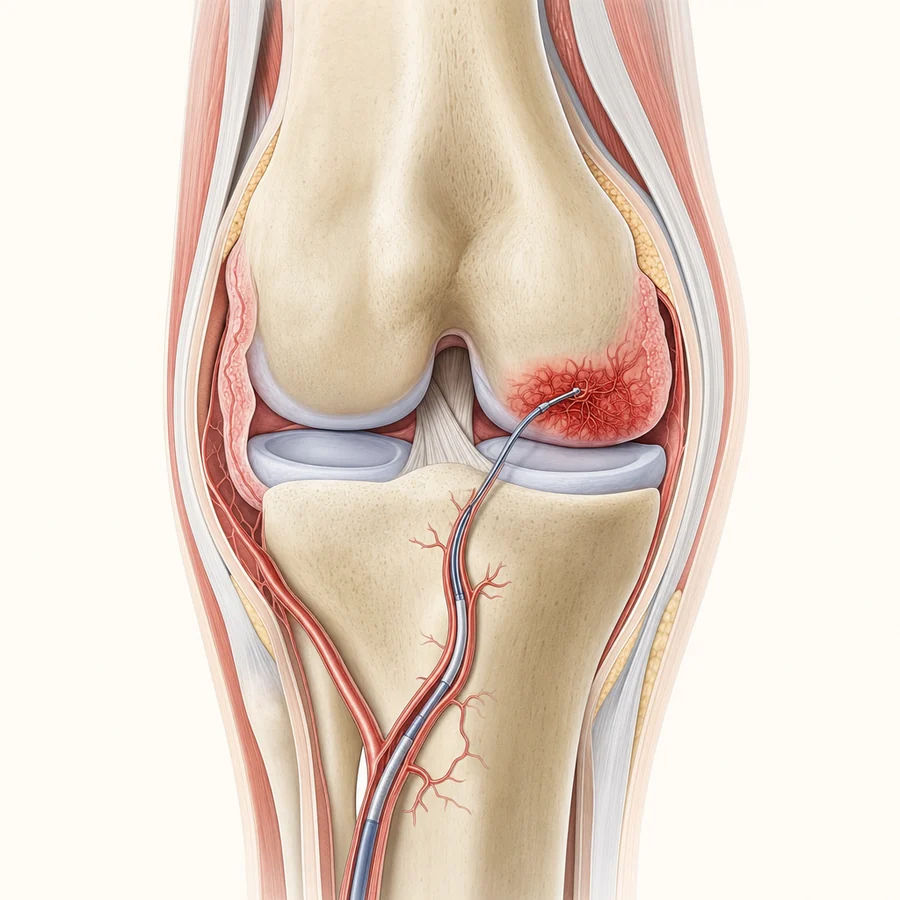
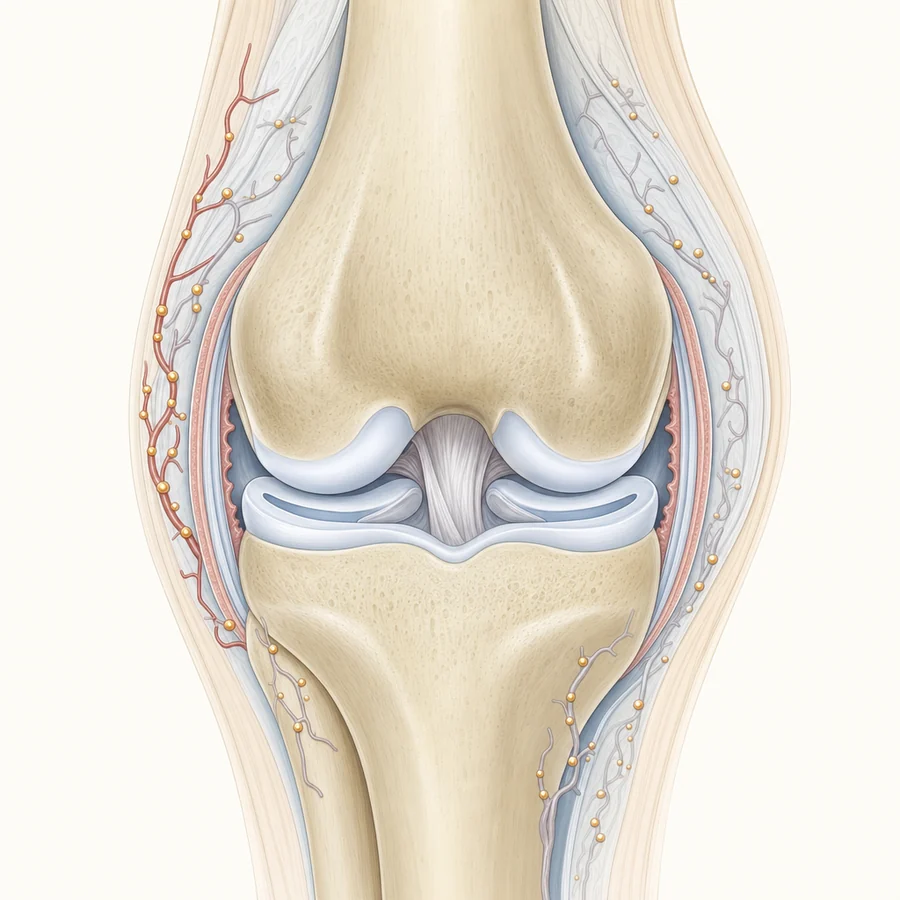
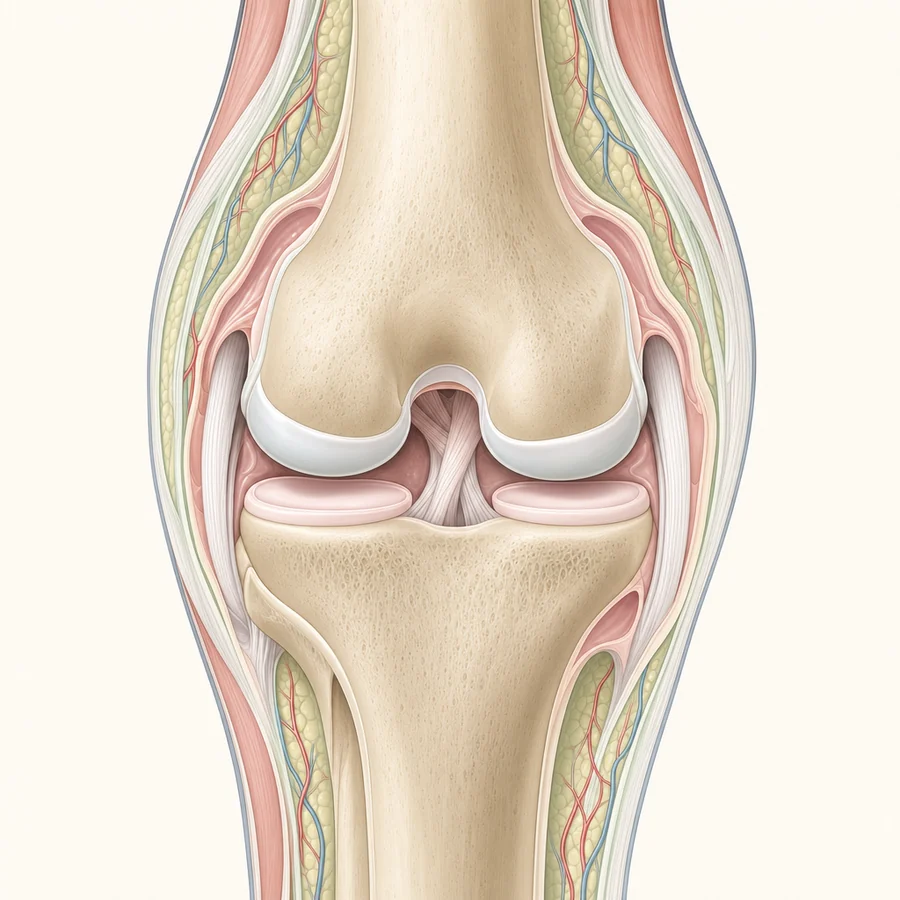
How GAE Works · Step 1 of 4
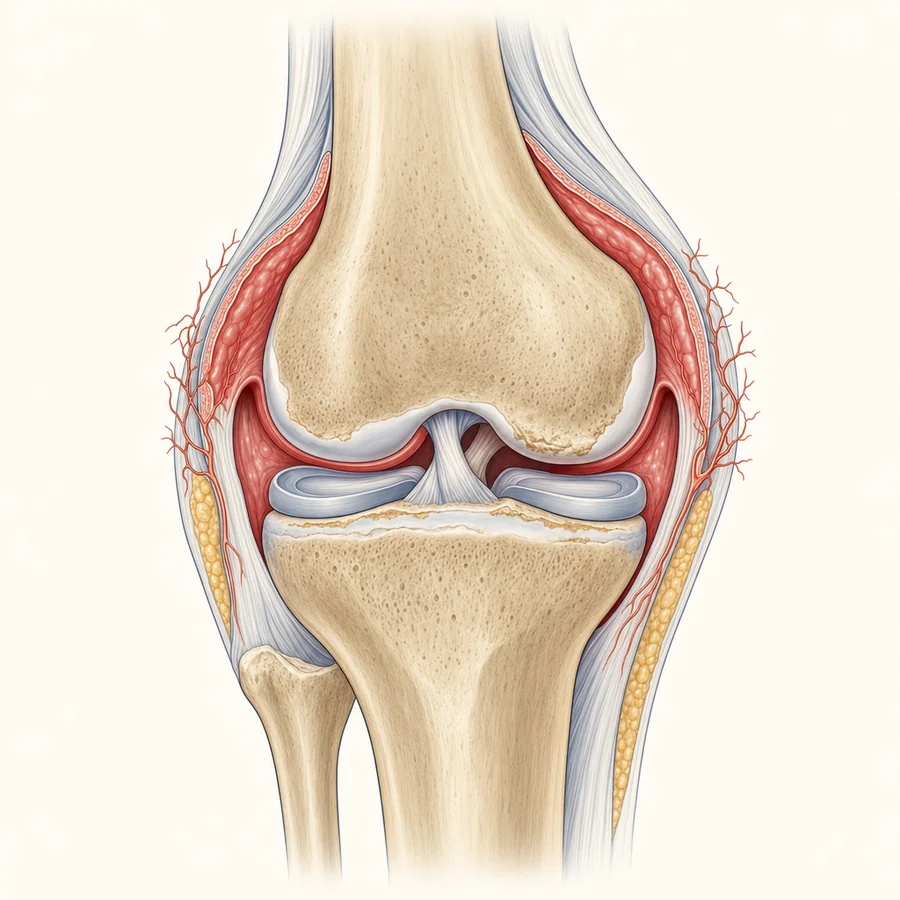
The problem: abnormal blood vessels
In a knee with osteoarthritis, the inflamed joint lining (the synovium) grows extra, abnormal blood vessels. That excess blood flow feeds ongoing inflammation, which is a major driver of knee pain.
Watch: How GAE Works
See how genicular artery embolization relieves chronic knee pain without surgery.
Local GAE evaluation
Genicular Artery Embolization in Queens, NY
Patients searching for genicular artery embolization in Queens can start with an M&S consultation at our Forest Hills office on Austin Street. The visit focuses on whether knee osteoarthritis, inflammation, meniscus problems, instability, or another cause is driving the pain before any procedure is recommended.
M&S serves Queens patients from Forest Hills, Rego Park, Kew Gardens, Flushing, Jamaica, Bayside, Elmhurst, Fresh Meadows, and nearby neighborhoods. When GAE is a reasonable option, Dr. Amir Salem reviews candidacy, imaging, risks, recovery, and whether treatment is better coordinated through Forest Hills or the accredited outpatient suite in Great Neck.
For patients comparing advanced medical services for GAE in Queens or Long Island, the goal is a complete knee-pain evaluation first: confirming whether pain is driven by osteoarthritis inflammation, checking prior imaging and injections, and explaining how genicular artery embolization fits alongside orthopedic, sports medicine, and rehabilitation options.
Am I a Candidate for GAE?
Candidates for GAE typically have imaging-confirmed osteoarthritis of the knee and a pattern of conservative treatment failure. Both the degree of arthritis on imaging and your symptom profile are reviewed at consultation.
Typical good-fit candidates
- ✓Moderate to severe knee osteoarthritis on X-ray or MRI
- ✓Chronic knee pain not adequately controlled with PT, NSAIDs, or injections
- ✓Wish to avoid or delay total knee replacement
- ✓Not surgical candidates due to age, weight, or comorbidities
- ✓Failed PRP or hyaluronic acid injections
- ✓Significant impact on daily activity or quality of life
Contraindications / not ideal for
- –Active knee infection or septic arthritis
- –Severe vascular calcification affecting access vessels
- –Certain post-surgical knee anatomies (confirm with Dr. Salem)
- –Inflammatory arthritis (e.g., rheumatoid) as primary diagnosis
Not sure if GAE is right for your knee pain?
Find out if you qualify — request a consultationHow GAE Works: Step-by-Step
1Pre-procedure imaging and consultation
Before GAE, we review your knee X-rays and MRI to assess the degree of osteoarthritis, map the genicular vascular anatomy, and confirm you are an appropriate candidate. Your symptom history, prior treatments, and functional impact are reviewed at the same consultation.
2The GAE procedure itself
On procedure day, you receive conscious sedation. The interventional radiologist makes a small puncture at the wrist or groin and advances a microcatheter under continuous fluoroscopic guidance into the genicular arteries supplying the inflamed synovium around your knee. Once the catheter is precisely positioned, embolic microspheres are deployed into the abnormal neovascular vessels, reducing the hyperemic blood flow that sustains synovial inflammation and pain.
3Recovery in the outpatient suite
After the procedure you spend a brief period in our recovery area. Most patients experience minimal discomfort and go home the same afternoon with a responsible adult driver. A small bandage covers the access site. Written discharge instructions and a direct contact line are provided.
What to Expect on the Day of Your Procedure
In our practice, we perform GAE under conscious sedation in a fully accredited outpatient suite at our Great Neck location. You'll arrive approximately one hour before your scheduled start time. Our nursing team will review your medications, allergies, and any questions before Dr. Salem begins.
The procedure typically takes between 45 minutes and 90 minutes. Most patients find the procedure well tolerated with minimal discomfort. After completion, you move to our recovery area for monitoring before discharge.
We ask that a responsible adult drive you home. You'll leave with a same-day contact number, written instructions covering activity restrictions, and a follow-up appointment to assess your pain response.
Recovery Timeline
- Day 1Most patients go home the same day. Some mild knee soreness at the treated site is normal.
- Days 2–7Resume light activity. Some patients notice early pain reduction within the first week as inflammation begins to settle.
- Weeks 2–4Return to full normal activities including walking and daily exercise. Pain improvement typically continues to build.
- 1–3 monthsMaximum pain relief typically realized as synovial inflammation continues to resolve.
Recovery timelines are approximate and vary by individual. Your care team will provide personalized guidance.
Risks and Alternatives
Here is an honest comparison of the main treatment options for chronic knee osteoarthritis pain so you can evaluate GAE in context.
| Treatment | Type | Anesthesia | Hospital Stay |
|---|---|---|---|
| GAE (this procedure) | Minimally invasive, catheter-based | Conscious sedation | Same-day outpatient |
| Total Knee Replacement ↗ | Surgical — joint resurfacing | General or spinal | 1–3 night stay + weeks rehab |
| Steroid / PRP Injections | In-office injection | Local | None |
| Physical Therapy | Conservative management | None | None |
| NSAIDs / Medication | Medical management | None | None |
Known GAE risks
- •Minor bruising or soreness at catheter access site (wrist or groin)
- •Temporary post-procedure knee soreness or swelling
- •Rare: skin discoloration from inadvertent superficial vessel embolization
- •Rare: non-target embolization
For the full risk-benefit discussion, schedule a consultation with Dr. Salem. This list is not a substitute for personalized medical advice.
Why Choose M&S Vascular for GAE

Your Interventional Radiologist
Amir Salem, MD
Board-certified interventional radiologist with subspecialty training in vascular and interventional procedures. Member, Society of Interventional Radiology.
Two convenient locations
Forest Hills, Queens and Great Neck, Long Island — serving patients from across the NYC metro area.
AAAHC-accredited outpatient suite
Procedures performed in a fully accredited ambulatory setting.
Fast response
We respond to consultation requests within 5 minutes during business hours.
Insurance accepted
Most major plans accepted. View accepted insurances →
What patients say
“I was told I needed a knee replacement and I wasn't ready for that. Dr. Salem explained GAE as a real alternative. Six months later I'm walking without a cane.”
“My knee pain had gotten to where I couldn't sleep through the night. After GAE it took about three weeks but the improvement was noticeable and it's held.”
“I had tried injections twice. This was completely different — a catheter procedure, same day home. My knee has not been this good in years.”
Frequently Asked Questions
Is GAE covered by insurance and Medicare?
Coverage varies by plan. GAE is an emerging procedure and insurance coverage is still evolving. Our team will verify your specific benefits and discuss financing options before your procedure.
How is GAE different from total knee replacement?
Total knee replacement is a major surgery that removes and replaces the damaged joint surfaces with metal and plastic implants, requiring general anesthesia and a hospital stay with weeks of rehabilitation. GAE is non-surgical: a thin catheter delivers embolic particles into abnormal blood vessels around the inflamed knee, reducing inflammation and pain — without removing bone or tissue, without general anesthesia, and with same-day discharge.
Will GAE affect my ability to have knee replacement later?
GAE does not alter the bony anatomy of the knee and does not preclude future total knee replacement if needed. It is designed as an alternative or a bridge procedure.
How long is recovery from GAE?
Most patients go home the same day. Light activity can typically resume within a few days, with full normal activity possible within 1–2 weeks. Pain reduction may begin within days to weeks of the procedure, with continued improvement over the following months.
Where is GAE performed in Long Island and Queens?
GAE at M&S Vascular is performed at our Great Neck, Long Island location in a fully accredited outpatient suite. We serve patients from across Long Island, Queens, and the broader NYC metro area including Forest Hills, Bayside, Flushing, and Manhasset.
Who is a candidate for genicular artery embolization?
Good candidates are adults with chronic knee pain from moderate to severe osteoarthritis who have not responded adequately to physical therapy, NSAIDs, or joint injections (steroid, hyaluronic acid, PRP), and who want to avoid or delay total knee replacement. A consultation and imaging review are required to assess candidacy.
What are the risks of GAE?
GAE is generally well tolerated. Risks include minor bruising or soreness at the catheter access site, temporary post-procedure knee swelling or discomfort, and rarely, skin discoloration from inadvertent superficial vessel embolization. Serious complications are uncommon. Your interventional radiologist will review all risks specific to your anatomy during your consultation.
How quickly will I see pain improvement?
Some patients notice early pain relief within days to weeks as knee inflammation decreases. Continued improvement typically occurs over the following 1–3 months.
Ready to Take the Next Step?
We respond to consultation requests within 5 minutes during business hours.
For appointment availability, insurance questions, or procedure fit, please call our Forest Hills office directly.
Call (718) 897-2228🔒 Your information is private and HIPAA-secure. We never share patient inquiries.