Sudden calf swelling can be easy to explain away at first. Maybe you walked more than usual, sat too long during travel, or twisted your leg without realizing it. But when one leg becomes swollen, painful, warm, red, or tender, a blood clot may need to be ruled out.
A blood clot in a deep leg vein is called deep vein thrombosis, or DVT. DVT can become dangerous if part of the clot travels to the lungs and causes a pulmonary embolism. That is why new one-sided swelling deserves prompt medical attention, especially when risk factors are present.
At M&S Vascular and Orthopedic Group P.C. in Forest Hills, Queens, Dr. Amir Salem and the vascular team evaluate leg swelling, calf pain, vein symptoms, and circulation concerns with a practical goal: identify urgent problems quickly and help patients understand the safest next step.
What a Blood Clot Ultrasound Checks
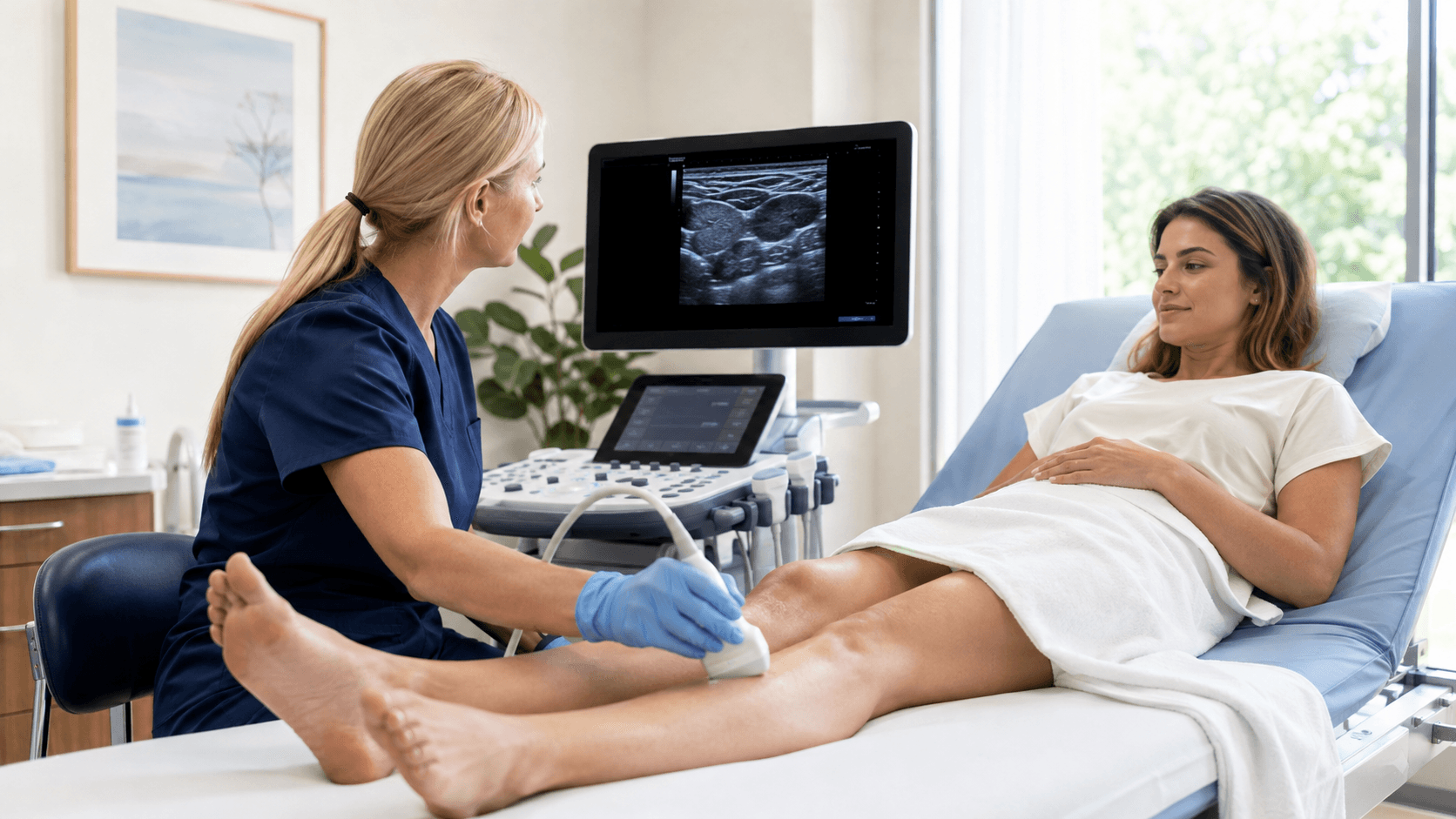
A venous duplex ultrasound is one of the main tests used to evaluate suspected DVT. It uses sound waves to show the veins and blood flow in the leg. During the exam, the clinician or technologist may gently press the ultrasound probe over different parts of the leg to see whether the veins compress normally.
Healthy veins usually compress under gentle pressure. A vein containing a clot may not compress normally, and blood flow may look blocked or changed. Ultrasound can also help the care team understand whether symptoms may be coming from another vein problem, such as venous insufficiency or superficial vein inflammation.
The test does not use radiation. It does not require an incision. Most patients can return to normal activities after the appointment unless treatment instructions say otherwise.
Symptoms That Should Not Be Ignored
Not every swollen leg is a DVT, but certain patterns should be checked promptly. Queens patients should take symptoms seriously if they notice:
- sudden swelling in one leg
- calf pain or tenderness
- warmth or redness in the leg
- new tightness, heaviness, or visible vein prominence
- swelling after surgery, injury, long travel, or bed rest
- symptoms with a prior history of blood clots
Some symptoms need emergency care. Call 911 for chest pain, shortness of breath, fainting, rapid heartbeat, coughing blood, sudden weakness, or stroke-like symptoms. These may point to a pulmonary embolism or another urgent condition.
Who Is at Higher Risk for DVT?
DVT risk increases when blood flow slows, the blood is more likely to clot, or a vein has been injured. Common risk factors include recent surgery, hospitalization, prolonged immobility, long flights or car rides, cancer, pregnancy, hormone therapy, smoking, obesity, inherited clotting conditions, and a personal or family history of blood clots.
Older adults and patients with multiple medical conditions should be especially careful about new leg swelling. The risk is not always obvious from symptoms alone, which is why a focused vascular evaluation matters.
What Happens at a DVT Evaluation
A DVT evaluation usually starts with a symptom review and medical history. The care team may ask when swelling began, whether it is one-sided, whether pain changes with walking or standing, whether the leg is warm or red, and whether recent travel, surgery, illness, or immobility occurred.
The exam may include checking pulses, skin color, tenderness, swelling pattern, visible veins, and signs of infection or injury. If a clot is suspected, venous duplex ultrasound may be recommended. Depending on the situation, additional blood work or imaging may be considered.
Treatment If a Clot Is Found
Treatment depends on clot location, clot extent, symptoms, medical history, and bleeding risk. Many DVT cases are treated with anticoagulation medication, commonly called blood thinners. These medications reduce the risk that a clot will grow or travel.
Some patients with extensive or severe clots may need more advanced care, including catheter-directed clot treatment or other vascular procedures. Dr. Salem reviews these options when the clinical picture supports them.
Follow-up matters. Patients may need repeat evaluation, medication monitoring, compression guidance, and instructions about activity, travel, and warning signs.
Why Local Vascular Access Matters
When a possible blood clot is involved, delays can create risk. A local Forest Hills vascular office can be helpful for patients from Rego Park, Kew Gardens, Jamaica, Flushing, Bayside, Elmhurst, and nearby Queens neighborhoods who need timely guidance.
M&S Vascular and Orthopedic Group also evaluates overlapping causes of leg symptoms. Swelling can come from DVT, vein reflux, PAD, injury, arthritis, medications, infection, heart or kidney issues, or a combination. Looking at the full picture helps patients avoid the wrong treatment path.
Frequently Asked Questions
Can ultrasound rule out a blood clot?
Venous duplex ultrasound is one of the primary tests used to evaluate suspected DVT. Your clinician will interpret the result together with symptoms and risk factors.
Is blood clot ultrasound painful?
The test is usually well tolerated. The probe may press on tender areas, especially if the leg is already swollen or painful, but it is non-invasive.
Should I massage a swollen calf before I know what it is?
Avoid deep massage when DVT is possible. Sudden one-sided swelling, warmth, redness, or calf pain should be medically evaluated first.
Where can I get checked for DVT in Queens?
M&S Vascular and Orthopedic Group evaluates possible DVT and leg swelling concerns in Forest Hills, Queens. Call (718) 897-2228 for scheduling guidance. Emergency symptoms such as chest pain or shortness of breath should be handled by calling 911.